Why You Suddenly Want a Different Breakfast in September
Quick Answer: Appetite genuinely shifts in autumn, driven mainly by reduced daylight affecting circadian rhythm and mood, cooler mornings raising the appeal of warm food, and a return to more structured schedules after summer. The practical response is warm, higher-protein breakfasts eaten at a consistent time, ideally with morning light exposure.
If the cold overnight oats you happily ate all summer suddenly seem unappealing, that is not a failure of discipline. Several real things change at this point in the year, and the sensible response is to change what you eat rather than to force the summer routine through.

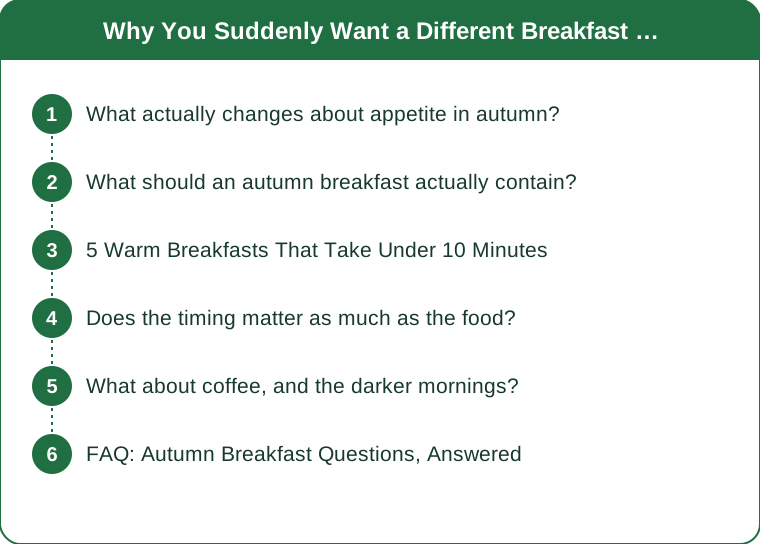
What actually changes about appetite in autumn?
Three factors, and they compound.
Daylight reduces, and that affects circadian timing. Morning light is the primary signal that sets your body clock. As sunrise gets later, the light cue arrives later or is missed entirely if you are indoors, which shifts appetite timing along with everything else. Many people find they are simply not hungry at the time they used to eat.
Reduced light affects mood and serotonin activity for some people, and one common consequence is increased appetite for carbohydrate-rich foods. This is a genuine, well-described pattern rather than a failure of willpower, and it becomes more pronounced as autumn progresses.
Temperature drives food preference directly. Warm food is more appealing when you are cold, and the appeal of cold breakfast food drops sharply once mornings are in the low teens. This is the most immediate and least mysterious of the three.
Schedules restructure in September. School terms, return-to-office patterns, and the end of holiday flexibility all mean breakfast happens at a different time and often in a bigger hurry than in August.
Why this matters practically: trying to maintain a summer breakfast routine through a season where three separate factors are pushing against it is unnecessarily hard. Adjusting the food is easier than adjusting the physiology.
What should an autumn breakfast actually contain?
The composition matters more than the specific foods, and three components do most of the work.
Protein, and more than most breakfasts contain. Protein is the most satiating macronutrient and it blunts the appetite response later in the day. A breakfast at around 20-30g of protein leaves most people considerably steadier through the morning than a carbohydrate-dominant one.
This is the single most impactful change for anyone whose autumn pattern involves being hungry an hour after eating.
Complex carbohydrate rather than refined. Oats, wholegrain bread, and starchy vegetables all provide the carbohydrate that autumn appetite is asking for, with fibre that slows the glucose response. The craving for carbohydrate is not the problem; the form it usually takes is.
Some fat. Nuts, seeds, nut butter, eggs, full-fat dairy, or avocado. Fat slows gastric emptying, which extends satiety and improves the texture and appeal of warm breakfast food considerably.
Warm, if you want it warm. There is no nutritional requirement for this and there is a real behavioural one - a breakfast you actually want to eat is better than an optimally composed one you skip.
What to reduce: breakfasts that are largely refined carbohydrate. Toast alone, most cereals, and pastries all produce a rapid rise and fall that lands as mid-morning hunger, and that pattern is more noticeable in autumn when appetite is already elevated.
5 Warm Breakfasts That Take Under 10 Minutes
1. Savoury oats with an egg. Oats cooked in stock rather than milk, with a soft-boiled or fried egg on top, plus whatever green vegetable you have. Around 20g protein, warm, and genuinely quick. This is the swap that converts people who thought they had gone off porridge.
2. Greek yoghurt warmed with stewed fruit. Warm the fruit - apples, pears, or frozen berries - in a pan with cinnamon while you make coffee, then spoon it over full-fat Greek yoghurt. The yoghurt does not need heating; the warm fruit changes the whole dish. High protein, five minutes.
3. Eggs on wholegrain toast with something green. Unremarkable and genuinely effective. Two eggs is roughly 12g protein; three, or the addition of cheese, gets you to a satiating figure. Spinach wilted in the pan takes thirty seconds.
4. Overnight oats, warmed. If you already make overnight oats, microwaving them for ninety seconds solves the temperature problem without changing anything else. Add nut butter and a scoop of protein powder if the protein content is low.
5. Cottage cheese on toast with tomato. Under-appreciated and very high in protein - a typical serving provides a substantial amount. Warm the toast, season the cottage cheese properly with black pepper, and it is considerably better than it sounds.
The batch option for busy mornings: baked oats or egg muffins made on Sunday, reheated in two minutes. This solves September’s schedule problem more than any single recipe does.

Does the timing matter as much as the food?
Possibly more, and it is the part most people do not adjust.
Eating at a consistent time helps regulate appetite. Circadian rhythm influences hunger hormones, and irregular meal timing makes appetite less predictable. September’s schedule change is exactly when consistency breaks.
Morning light is the more powerful lever. Getting outside within an hour of waking, even on an overcast day, provides a stronger circadian signal than any indoor lighting. Outdoor light on a cloudy autumn morning is still dramatically brighter than a well-lit room.
Combining the two: a short walk before or after breakfast anchors the day considerably more effectively than either eating on time or getting light alone.
If you are not hungry in the morning, that is worth taking seriously rather than overriding. Some people function well eating later, and forcing breakfast at 7am because it is conventional is not obviously beneficial. What matters is that the total day’s intake is adequate and that the timing is consistent.
If you are hungrier than usual, check three things before treating it as a problem: sleep duration, protein intake at the previous evening meal, and total daily energy intake. Increased autumn appetite is frequently a response to one of those rather than to the season itself.
The mid-morning crash test: if you are ravenous at 10.30am, your breakfast was probably too low in protein or too small. That is a composition problem with a straightforward fix, not a discipline problem.
What about coffee, and the darker mornings?
Both come up constantly in autumn and both have practical answers.
Coffee suppresses appetite temporarily, which is why coffee-first mornings often become skipped-breakfast mornings. If you find yourself not hungry until 11am, coffee at 7am is a plausible reason.
Coffee on an empty stomach causes discomfort for some people and not others. If it does for you, eating something first is a simpler fix than giving up coffee.
Caffeine timing and sleep: caffeine has a half-life of roughly five to six hours, meaning an afternoon coffee still has meaningful caffeine in your system at bedtime. As autumn progresses and sleep quality matters more for mood, moving the cutoff earlier is worth trying.
Darker mornings make getting up harder, and there is no way around the fact that this is genuinely a physiological effect rather than a motivational one. Waking in darkness does not produce the light-driven cortisol response that helps you feel alert.
What helps: getting outside as early as practical, keeping wake time consistent even at weekends, and bright indoor light on waking if outdoor light is not available. Some people find a dawn-simulating alarm useful; the evidence is mixed but the intervention is low-risk.
If low mood, appetite change, and low energy arrive together and persist, that pattern is worth discussing with a doctor rather than managing with breakfast changes alone. Seasonal patterns in mood are common and treatable, and there are effective approaches. This is general information, not medical advice.
FAQ: Autumn Breakfast Questions, Answered
Is it normal to be hungrier in autumn?
Many people report increased appetite, particularly for carbohydrate, as daylight reduces. It is a commonly described pattern. Check sleep and protein intake before assuming it is purely seasonal.
How much protein should breakfast have?
Around 20-30g suits most adults and is considerably more than a typical breakfast provides. It is the change most likely to fix mid-morning hunger.
Do I have to eat breakfast?
No. Consistency and adequate total intake matter more than whether you eat at 7am. If you are genuinely not hungry, eating later is a reasonable choice.
Does warm food actually digest better?
Not meaningfully - the appeal of warm food in cold weather is about comfort and preference rather than digestion. That is a good enough reason on its own.
What’s the fastest high-protein option?
Greek yoghurt with nuts, or cottage cheese on toast. Both take under three minutes and both provide substantially more protein than cereal or plain toast.
TL;DR:
- Autumn appetite shifts for real reasons: reduced morning light, cooler temperatures, and restructured schedules
- Aim for 20-30g protein at breakfast - it is the single change most likely to fix mid-morning hunger
- Warm, quick options: savoury oats with an egg, warmed stewed fruit over Greek yoghurt, cottage cheese on toast
- Morning light exposure matters as much as what you eat, and outdoor light beats indoor even when overcast
- Coffee before food is a common reason for not feeling hungry until late morning
If low mood, appetite change and low energy arrive together and persist, that is worth a conversation with a doctor. This is general information, not medical advice.
Keep Reading
This article is for general informational purposes only and is not medical advice. Always consult a qualified health professional for guidance specific to you.