Cold Breakfast vs. Warm Breakfast: Does It Actually Matter for Digestion and Energy?
Claims that cold breakfasts damage digestion while warm breakfasts support it circulate widely enough to make overnight oats feel like a small daily risk, but the actual physiological picture is much less dramatic than the claims suggest. Here is what has some real basis, what gets overstated, and how to choose based on your own body’s actual response rather than a blanket rule.

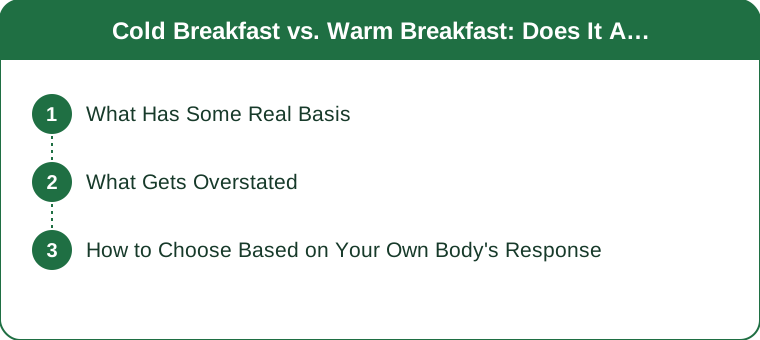
What Has Some Real Basis
The legitimate mechanisms: the the-warm-food-may-ease-digestion-slightly-for-some (the some people subjectively reporting easier digestion with warm food, possibly related to how warmth affects gut motility and comfort — the a-real-subjective-effect-for-some-people), the the-cold-food-and-gut-sensitivity (the certain digestive sensitivities, including some IBS presentations, sometimes responding better to warm food anecdotally, though evidence is mixed and individual — the anecdotal-and-individual-not-a-universal-rule), the the-traditional-medicine-systems-emphasize-warmth (the several traditional medicine frameworks longstanding emphasis on warm food for digestion reflecting real accumulated observation, even without modern mechanistic proof for every claim — the tradition-reflects-something-even-if-not-fully-explained), the the-temperature-affects-perceived-fullness-slightly (the warm foods sometimes feeling more satiating in the moment than an equivalent cold dish, affecting how much is eaten — the perception-of-fullness-can-differ-by-temperature), the the-cold-food-doesn’t-slow-metabolism-meaningfully (the claim that cold food forces the body to expend significant extra energy warming it having only a trivially small real effect, not the dramatic metabolic slowdown sometimes claimed — the the-metabolic-claim-is-overstated), and the reframe (the real basis as modest, individual and partly subjective — some people genuinely feel a digestive difference, but it is not a universal rule with dramatic stakes)).

What Gets Overstated
The exaggerated claims: the the-cold-food-damages-digestion-claim (the assertion that cold breakfasts meaningfully harm digestive function lacking strong broad evidence for the general population — the not-supported-as-a-universal-claim), the the-warm-food-detoxifies-claim (the language suggesting warm food actively removes toxins overstating what temperature alone can do nutritionally — the temperature-doesn’t-detoxify-anything), the the-one-right-answer-for-everyone-claim (the framing this as having a single correct answer ignoring how individual and varied digestive responses actually are — the individual-variation-undermines-any-universal-rule), the the-nutrient-content-claim (the suggestion that temperature significantly changes the nutrient value of a breakfast, when nutrient content is determined by ingredients and preparation, not serving temperature — the nutrients-don’t-change-with-serving-temperature), the the-energy-levels-claim (the claim that a cold breakfast provides meaningfully less sustained energy than a warm one, which isn’t supported when the actual food composition is comparable — the macronutrient-composition-matters-far-more-than-temperature), and the frame (the overstated claims as digestive damage, detoxification, a single universal answer, changed nutrient content, and reduced energy — none holding up as strongly as the confident claims suggest).
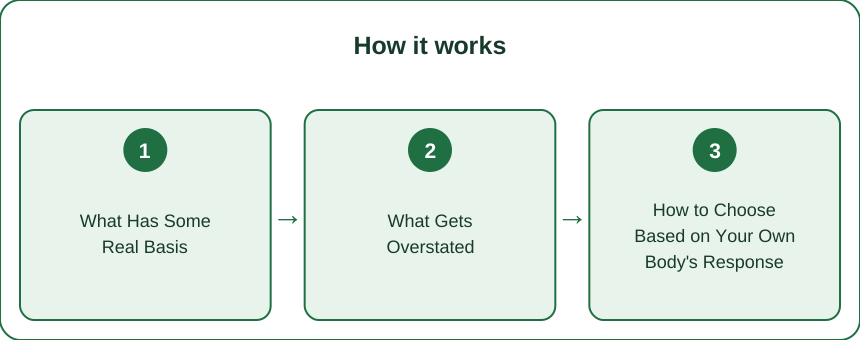
How to Choose Based on Your Own Body’s Response
The practical approach: the track-how-you-feel-after-each-type (the noting energy, fullness and digestive comfort after a few warm versus cold breakfasts to build actual personal data — the your-own-data-beats-any-general-claim), the the-consider-the-season-and-context (the a genuinely appealing warm breakfast in winter or cold breakfast in summer being partly about comfort and appetite, which is a valid reason on its own — the comfort-and-appetite-are-legitimate-factors-too), the the-prioritize-composition-over-temperature (the focusing energy on protein and fiber content, which matter far more for fullness and sustained energy than serving temperature from the high-protein-breakfast-ideas-guide logic — the composition-is-the-bigger-lever), the the-if-you-notice-a-real-difference-honor-it (the some people genuinely noticing a consistent personal difference, which is worth honoring even without a broad population-level explanation — the personal-pattern-is-valid-evidence-for-you-specifically), the the-don’t-force-a-preference-you-don’t-have (the not switching away from a genuinely preferred breakfast style due to an overstated general claim if no personal issue exists — the don’t-fix-a-problem-you-don’t-actually-have), and the frame (the practical approach as tracking your own response, factoring in season and appetite, prioritizing composition over temperature, honoring any real personal pattern, and not forcing a change without a real reason — the right choice is whichever one your own body and appetite actually prefer).
The cold-versus-warm breakfast debate has some real basis — certain people genuinely report easier digestion with warm food, and traditional medicine systems’ longstanding emphasis on warmth likely reflects real accumulated observation — but claims that cold food meaningfully damages digestion, slows metabolism significantly, or reduces nutrient content are overstated well beyond the actual evidence. Nutrient content and sustained energy come from a breakfast’s ingredients and composition, particularly protein and fiber, not its serving temperature. The most useful approach is tracking how your own body responds to each style over a few tries, factoring in genuine seasonal appetite preferences, prioritizing protein and fiber content over temperature, and honoring any real personal pattern you notice without forcing a change based on an overstated general claim that doesn’t actually apply to you.
Keep Reading
This article is for general informational purposes only and is not medical advice. Always consult a qualified health professional for guidance specific to you.