Does Breakfast Protein Timing Actually Matter on Workout Days?
Quick Answer: For most people doing moderate morning exercise, eating protein within about 1-2 hours after the workout supports muscle recovery just as well as eating immediately before — the so-called ‘anabolic window’ is much wider than older fitness advice suggested. Total daily protein intake matters more than exact timing for most goals.
Morning workout routines create a real logistical question: eat before, eat after, or split it? The answer depends less on a strict timing rule and more on what actually fits your schedule and digestion.

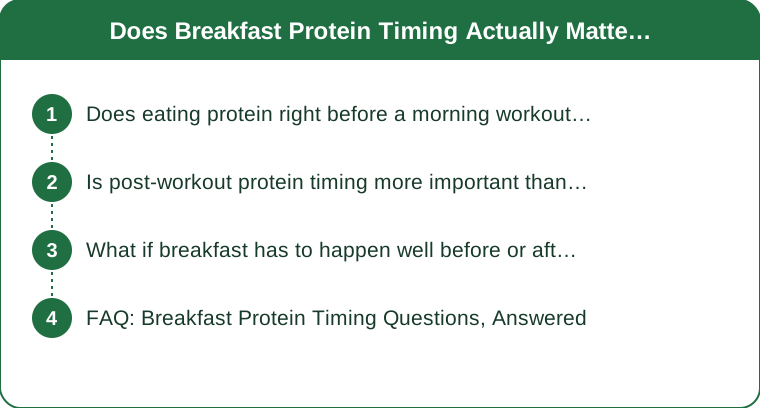
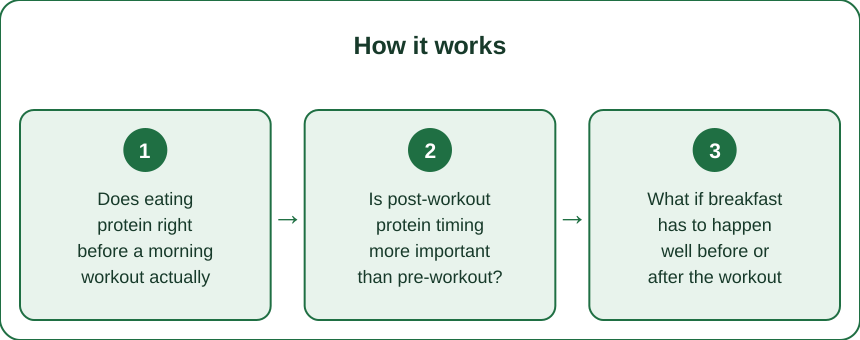
Does eating protein right before a morning workout actually help performance?
For workouts happening within an hour of waking, a small amount of easily digestible protein (like a protein shake) can help prevent excessive muscle breakdown during the session, though the effect is modest for shorter or lower-intensity sessions. For longer or more intense training, eating something 30-60 minutes beforehand generally supports better performance than training fully fasted, though some people successfully train fasted without noticeable performance loss.
Is post-workout protein timing more important than pre-workout?
Research on the ‘anabolic window’ — once thought to be a tight 30-45 minute post-workout period — now generally suggests a wider window of a few hours works fine for most people, as long as adequate protein is consumed across the day. Eating a substantial protein-containing breakfast within roughly 1-2 hours after a morning workout supports recovery well without needing to rush a shake the second you finish.

What if breakfast has to happen well before or after the workout due to schedule?
If there’s a longer gap on either side, total daily protein intake spread across meals matters more than hitting a precise timing window around any single workout. Someone who eats a normal breakfast two hours before working out, then a protein-containing meal a few hours after, is very likely getting adequate support for recovery without needing to time anything more precisely than that.
FAQ: Breakfast Protein Timing Questions, Answered
How much protein should breakfast have on workout days?
A general target of 25-35 grams at breakfast supports both satiety and recovery for most active adults, adjusted for individual body size and goals.
Is it bad to work out completely fasted in the morning?
Not inherently — many people train fasted without performance issues, though those doing intense or long sessions may notice better performance with a small pre-workout snack.
Does the type of protein at breakfast matter for a workout day?
Easily digestible sources (eggs, Greek yogurt, a protein shake) tend to sit better pre-workout than very high-fat or high-fiber meals, which can feel heavy during exercise.
TL;DR:
- The post-workout anabolic window is wider than older advice suggested — a few hours, not 30 minutes
- A small easily digestible protein source before a longer or intense workout can help performance
- Total daily protein intake matters more than exact timing for most people’s goals
- Match protein timing to your schedule rather than rushing to hit an overly strict window
If your schedule doesn’t allow perfect timing, don’t stress it — consistent daily protein intake covers most of what timing precision would add.
Keep Reading
This article is for general informational purposes only and is not medical advice. Always consult a qualified health professional for guidance specific to you.