The Freezer Breakfast Prep System That Actually Survives a Busy Week
Quick Answer: Egg-based dishes (muffin-tin frittatas, breakfast burritos), oat-based bakes, and pancakes/waffles all freeze and reheat well; anything with fresh dairy toppings, delicate fruit, or crispy elements added before freezing generally doesn’t. Prep the base, add fresh elements at reheat time.
The gap between Sunday’s meal-prep enthusiasm and Wednesday’s freezer-burned disappointment usually comes down to picking the wrong recipes for freezing, not a failure of effort. Some breakfasts are built for the freezer; others just aren’t, no matter how carefully you portion them.
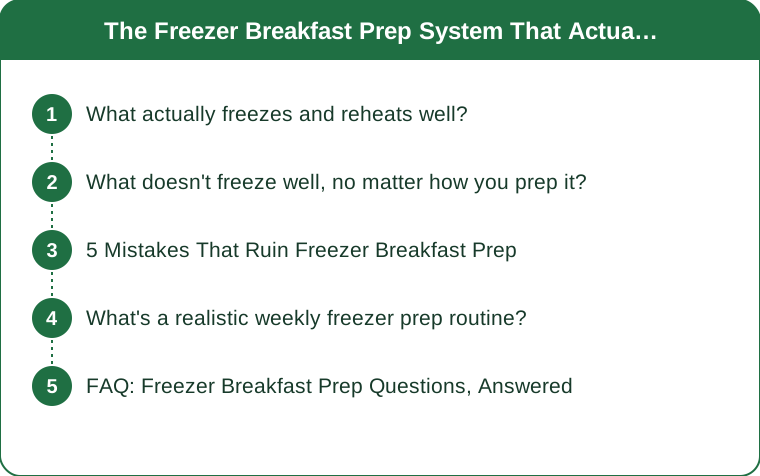
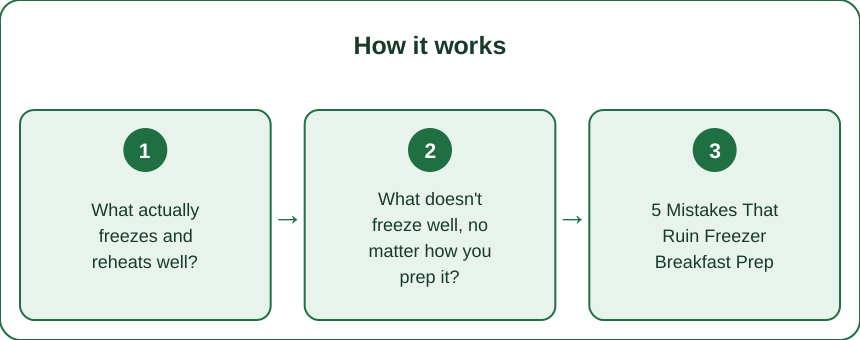
What actually freezes and reheats well?
Egg-based dishes hold up best. Muffin-tin egg bites, breakfast burritos, and baked frittata squares freeze cleanly and reheat in a microwave or oven without major texture loss, since eggs firm up in a way that survives freezing better than most other breakfast components.
Baked oatmeal and oat bars freeze well because their dense, already-set texture doesn’t rely on crispness or a fresh-cooked mouthfeel to taste good reheated.
Pancakes and waffles freeze exceptionally well individually wrapped or separated with parchment, and reheat directly from frozen in a toaster in under 3 minutes, which makes them one of the lowest-effort freezer breakfast options available.
What doesn’t freeze well, no matter how you prep it?
Anything relying on crispness — bacon, hash browns, crispy potatoes — loses its texture entirely after freezing and reheating, turning soft or rubbery in a way no reheat method fully fixes.
Fresh fruit added directly into a dish before freezing (like berries baked into a muffin) tends to release excess water on thawing, making the final texture mushy. Add fresh fruit at serving time instead of freezing it in.
Dairy-heavy toppings like yogurt or fresh cream separate and turn watery after freezing — keep these as a fresh add-on rather than part of the frozen base.
5 Mistakes That Ruin Freezer Breakfast Prep
1. Not cooling completely before freezing. Freezing warm food creates ice crystals that degrade texture significantly more than freezing fully cooled food.
2. Using containers that aren’t actually airtight. Freezer burn is a moisture-exposure problem, not a time problem — a loosely sealed container burns faster than a well-sealed one lasts even at double the time.
3. Freezing in one giant batch instead of portions. A single large block takes forever to thaw and forces you to reheat more than you need; individual portions solve both problems.
4. Skipping labels with dates. Freezer contents become mystery items fast — a label takes 10 seconds and prevents food waste from forgotten portions.
5. Reheating from frozen at too high a power setting. Blasting frozen eggs on full microwave power creates rubbery edges before the center heats through — medium power with a stir halfway through works better.
What’s a realistic weekly freezer prep routine?
Pick one egg-based recipe and one oat or pancake-based recipe each prep session rather than trying to freeze five different breakfasts at once — variety sounds appealing on Sunday but usually just means five half-eaten batches by the following week.
Portion immediately into grab-and-go containers sized for one serving, so the friction of “defrosting the right amount” disappears completely. A batch of 8-10 portions from a single Sunday session typically covers most of a work week with minimal daily effort.
FAQ: Freezer Breakfast Prep Questions, Answered
How long do frozen breakfast preps actually stay good?
Most egg-based and oat-based freezer breakfasts hold quality well for about 2-3 months; beyond that they’re typically still safe but texture and flavor start to decline noticeably.
Can I reheat frozen breakfast burritos in the microwave?
Yes — wrap in a damp paper towel and microwave in 60-90 second increments, checking and flipping halfway, which helps the tortilla stay pliable instead of turning tough.
Is it better to freeze breakfast raw or fully cooked?
Fully cooked, for almost all breakfast foods — raw egg mixtures and raw batters generally don’t freeze and reheat as reliably as fully cooked versions do.
TL;DR:
- Egg dishes, baked oats, and pancakes/waffles freeze and reheat reliably
- Skip freezing crispy elements, fresh fruit, and dairy toppings — add those fresh at serving
- Cool completely before freezing, portion individually, and label with dates
- One egg recipe plus one oat/pancake recipe per session beats five half-used batches
Freezer breakfast prep works — it just needs the right recipes matched to the freezer, not sheer meal-prep enthusiasm.
Keep Reading
This article is for general informational purposes only and is not medical advice. Always consult a qualified health professional for guidance specific to you.